

- Limits apply to each axle and axle group, not just the whole truck. A truck can be under 56 tonnes and still overloaded on one axle.
- A 5% tolerance applies to axle and axle-group loads — it allows for cargo shifting in transit, not for loading.
- If an axle is over but gross weight is within the limit, the load can be redistributed and re-weighed without a charge.
- The cheapest fix is weighing at the point of loading, axle by axle.
Overloaded trucks damage roads, wear out tyres, brakes and suspensions faster, and take longer to stop. That is why weighbridges sit along the main corridors in both countries — and why overload charges and delays are a routine cost for transporters who don't weigh before they leave.
The limits at a glance
| Axle or axle group | Tyres | Legal limit | With 5% tolerance |
|---|---|---|---|
| Single axle (e.g. steering) | 2 conventional | 8.0 t | 8.4 t |
| Single axle | 4 conventional | 10.0 t | 10.5 t |
| Single axle | 2 super single | 8.5 t | 8.925 t |
| Tandem group | 8 conventional | 18.0 t | 18.9 t |
| Tandem group | 4 super single | 16.0 t | 16.8 t |
| Tridem group | 12 conventional | 24.0 t | 25.2 t |
| Tridem group | 6 super single | 22.5 t | 23.625 t |
Four further rules catch people out:
- Gross vehicle weight is capped at 56 tonnes, on a maximum of seven axles — and it is further limited by the spacing between axles (the bridge formula).
- No single axle inside a tandem or tridem group may exceed the single-axle limit.
- An axle group has at most three axles.
- Liftable axles need the manufacturer's certified dead man's switch and must drop down automatically when the vehicle is loaded.
How the 5% tolerance works
The tolerance applies to axle and axle-group loads. A tandem group on eight conventional tyres has a legal limit of 18 tonnes; with tolerance, up to 18.9 tonnes is accepted.
If a truck is over the limit on an axle or axle group but within its gross weight limit, the driver is allowed to redistribute the cargo and re-weigh — and is not charged if the load is brought within tolerance. If it can't be, the overload is charged.
The tolerance exists because cargo moves in transit. Treat it as a safety margin, not a loading target: plan every load to the legal limit.
Why trucks end up overloaded on one axle
- Cargo placed too far forward or back on the trailer, pushing weight onto one group.
- Fifth-wheel position that loads the tractor's drive axle more than intended.
- Dense cargo loaded by volume — cement, steel, ore and bagged goods reach the weight limit long before the trailer looks full.
- Super single tyres, which carry lower limits than conventional duals: 8.5 t against 10 t on a single axle, and 16 t against 18 t on a tandem.
- Loads estimated from paperwork rather than measured.
How to avoid overload charges
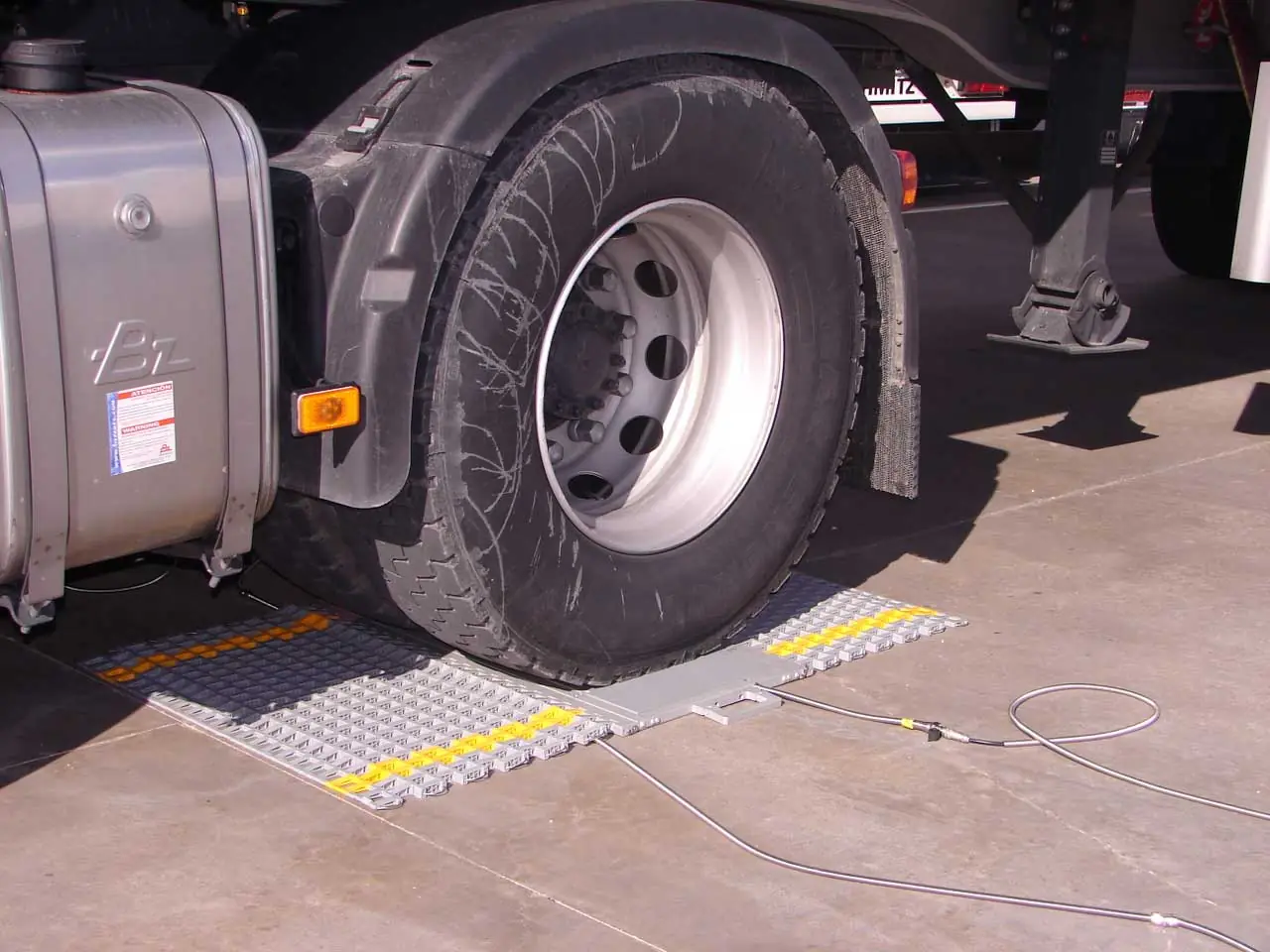
- Weigh at the point of loading. A weighbridge at the depot, mine or warehouse — or portable axle pads where a fixed scale isn't practical.
- Weigh axle by axle, not just the total. Gross weight alone won't show a single overloaded group.
- Write a loading plan for each trailer type — where heavy items go and the maximum per position.
- Keep the weigh ticket with the vehicle, so the driver can show what left your gate.
- At high-volume sites, weigh every truck at the exit. Mines, quarries and ports can use low-speed weigh-in-motion or a weighbridge with ANPR cameras, linked to their ERP, so no overloaded truck leaves the gate.
- Watch the pattern. GPS tracking shows how long trucks spend at each weighbridge; repeated long stops at the same station point to a loading problem worth fixing.
For road authorities and toll operators
High-speed weigh-in-motion measures every axle at traffic speed, so only the trucks that are likely to be overweight need to be pulled into a static weighbridge. That protects the road without stopping compliant traffic.
This guide summarises the EAC limits for planning purposes. Figures are taken from the EAC Vehicle Load Control Act, 2016, as set out in the Shippers Council summary of axle load limits and the vehicle load regulations published by TANROADS. Always confirm current limits and charges with TANROADS in Tanzania or KeNHA in Kenya before loading.